

To maintain your commercial glass doors, focus on the parts that move, make contact, and absorb daily stress. Keep panels clean using non-abrasive products, remove debris from tracks before it affects movement, and apply the correct lubricant to hinges, rollers, and pivots to reduce friction. Test closers regularly to confirm controlled speed and full closure, and inspect seals and gaskets to prevent air, moisture, and vibration from reaching internal components.
In addition, inspect alignment, tighten mounting hardware evenly, and replace worn rollers or closers before they strain the system. Watch how panels move during opening and closing cycles and address noise or resistance immediately. Consistent maintenance protects glass doors from uneven wear, limits service interruptions, and helps avoid costly repairs caused by neglected components.
This guide covers maintenance tips for commercial glass doors. Keep reading to learn exactly what to do.
1. Hire Professionals to Repair Minor Issues Immediately You Notice Them
Another way to maintain your commercial glass doors is to hire professionals to address minor issues as soon as you notice them. Small problems like misalignment, unusual noise, slow movement, or loose hardware can escalate quickly if left unattended.
A-24 Hour Door National Inc. provides professional commercial glass door repair. Our AAADM-certified technicians understand how these systems perform under daily traffic. With 24/7 availability, fully stocked service trucks, and experience across retail, healthcare, and industrial facilities, A24 resolves issues before they lead to downtime, safety concerns, or costly replacements.
We repair doors in Rochester, Buffalo, Cincinnati, and Philly. Below are our phone nos:
- Rochester, NY: (800) 884-4440
- Cincinnati, OH: (513) 821-7500
- Philadelphia, PA: (215) 654-9550
- Buffalo, NY: (716) 894-2000
2. Lubricate Hinges, Rollers, and Moving Components Correctly
Lubricate moving parts by applying a manufacturer-approved lubricant directly to hinges, rollers, and pivot points. Use a small amount and wipe away excess immediately. Too much lubricant attracts dust, which increases friction and wear. Focus on components that support movement rather than decorative parts.
Open and close the panel several times after applying the lubricant to evenly distribute it. Listen for grinding or squeaking, as these sounds indicate missed contact points or internal wear. If noise persists, inspect the component again rather than adding more product.
Avoid petroleum-based sprays near glass edges or seals. These products can weaken surrounding materials and lead to uneven motion. Proper lubrication supports smooth operation and reduces strain on connected components.
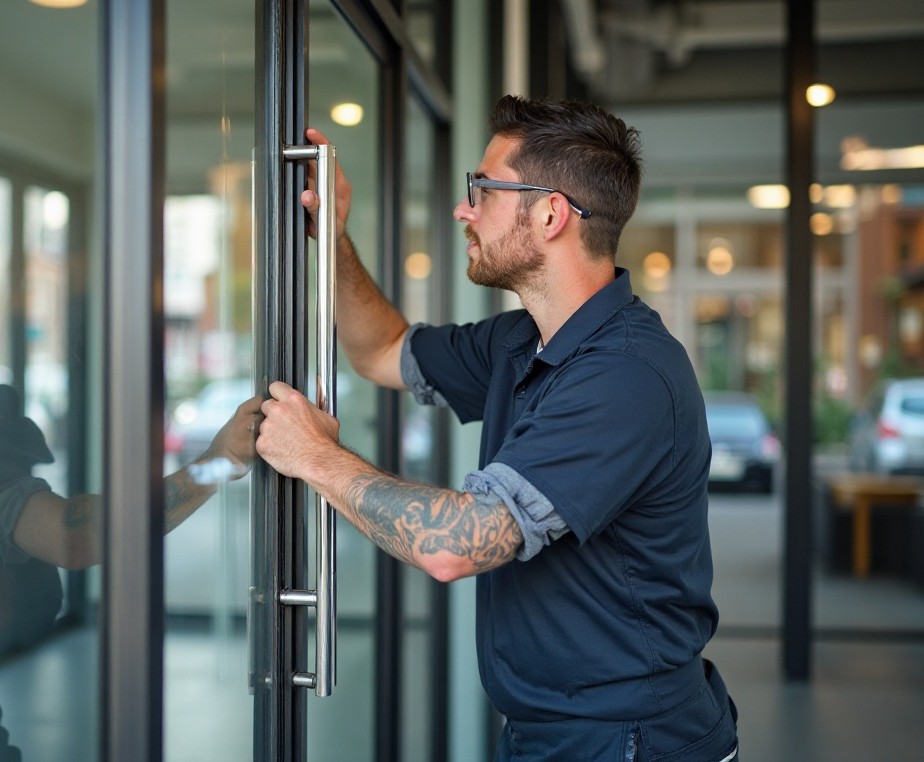
3. Clean Glass Surfaces and Frames Without Causing Damage
Clean glass doors using a non-abrasive cleaner and a soft, lint-free cloth. Spray the cleaner onto the fabric instead of directly onto the surface to prevent liquid from seeping into frame joints. Wipe in straight vertical strokes to avoid streaks and make residue easier to spot. Pay close attention to corners and lower sections where fingerprints, dust, and debris collect from daily traffic.
Wipe frames after cleaning the panels. Use a damp cloth to remove dirt from aluminum or metal edges, then dry the surface to prevent moisture buildup. Avoid harsh chemicals that weaken seals or discolor finishes. Do not use scrapers or rough pads, as they can scratch the surface and weaken structural integrity.
Clean surrounding windows at the same time to maintain consistent visibility and reduce uneven dirt buildup that can affect appearance and performance. Regular upkeep reduces wear, supports smooth operation, and limits the need for repairs or replacement over time.
4. Test Door Closers and Control Movement Speed
Test door closers by opening the panel fully and allowing it to return without assistance. The panel should move steadily and close completely without slamming or stopping short. Adjust the closer valves gradually if the speed feels inconsistent. Make small changes and retest after each adjustment.
Check the closing force at different times of day. Temperature changes affect fluid pressure in closers, potentially altering performance. Confirm that the closer holds the panel in place without drifting once closed.
If the closer leaks fluid or resists adjustment, plan a replacement. Reliable control reduces impact stress and protects the glass surface from repeated shock.
5. Inspect Glass Doors for Damage and Alignment Issues
Inspect glass doors by checking both sides of the panel under natural or overhead light. Focus on the edges first, since pressure stress often forms where the glass meets the frame. Feel along the perimeter to detect chips, sharp spots, or uneven tension. Push gently near the corners and center to confirm the panel stays firmly set without shifting. Movement within the frame signals early wear that can affect long-term performance.
Open and close the entry several times and watch how the panel travels. Confirm the glass stays level from start to finish without tilting or dragging. Uneven motion can increase strain on door hardware and shorten service life. On paired panels, check the spacing between each side to ensure even clearance. If one side moves faster, note the direction and amount.
Check brackets, clamps, and fasteners that secure the panel. Tighten hardware evenly to avoid twisting force. Address minor issues early as part of regular maintenance to reduce the need for repairs or complete replacements later. Proper glass door care supports preventative tips, limits emergency board up situations, and reduces the likelihood of repair affecting nearby windows.
6. Check Tracks and Rollers for Smooth Panel Movement
Check tracks and rollers by inspecting the full travel path along the bottom and top guides. Remove dirt, grit, and small objects using a vacuum or soft brush. Even minor debris causes dragging that stresses the system. Run the panel manually to confirm it glides evenly without hesitation or noise.
Inspect rollers for flat spots or uneven wear. Worn rollers cause vibration and place excess force on mounting points. Replace damaged components promptly to avoid misalignment spreading across the system. Confirm rollers sit correctly inside the track and do not rub against the sides.
Keep the track dry after cleaning. Moisture attracts debris and accelerates wear. Proper attention to these areas supports long-term operation and reduces unexpected service interruptions.
7. Inspect Seals and Gaskets Along the Edges
Inspect seals by running your hand along all edges where the panel meets the frame. Look for cracks, gaps, or hardened sections that no longer compress properly. Damaged seals allow air, dust, and moisture to enter the opening.
Press lightly against the seal and confirm it rebounds evenly. Brittle or flattened sections indicate wear. Replace worn gaskets promptly to maintain a tight fit and reduce vibration during movement.
Clean seals with mild soap and water only. Dry thoroughly to prevent residue buildup. Proper sealing protects internal components and supports consistent operation.
8. Check Locks, Handles, and Mounted Hardware
Check handles and locking mechanisms by operating them multiple times from both sides. Movement should feel firm and smooth without sticking. Tighten loose fasteners evenly to prevent shifting pressure against the panel.
Inspect mounting points for wear or elongation. Hardware that shifts can transfer stress to the glass edge. Replace worn parts early to prevent larger failures.
Confirm all components align correctly when closed. Secure hardware supports safe daily use and limits the need for repairs related to misalignment.
FAQs
How often should commercial glass doors be inspected for maintenance?
Inspect high-traffic glass doors monthly and lower-use entrances at least quarterly. Frequent checks help catch alignment issues, worn rollers, or loose hardware before they cause operational problems.
What parts of a glass door require the most maintenance attention?
Focus on rollers, tracks, hinges, closers, seals, and mounting hardware. These components handle constant movement and wear faster than the glass panels themselves.
When does a door issue require professional maintenance instead of in-house care?
Call a professional if it drags, slams, fails to close fully, or shows recurring alignment problems. Automatic systems and structural issues should always be serviced by trained technicians.
Is maintenance different for manual versus automatic glass doors?
Yes. Manual doors require closer inspection of hinges, closers, and handles, while automatic systems require regular testing of sensors, operators, and safety features, as well as mechanical parts.