

When your commercial door fails:
- Call A-24 Hour Door National Inc. for emergency repairs
- Secure the entrance until help arrives to keep your building safe
- Document the malfunction for faster diagnosis
- Stop using these doors immediately to prevent more damage
- Check for safety risks to prevent injuries while waiting
- Check whether the problem involves springs or door hardware to describe when you call
- Prepare the area for the technician to speed up the process
- Schedule preventive maintenance to reduce future malfunctions
This guide explains what to do in detail. Keep reading to learn more.
1. Call A-24 Hour Door National Inc. for Emergency Repair
Call our company for emergency door repair. We will send a trained technician immediately to stop a commercial door failure from worsening. When doors stop moving, stop catching, or jam, the cause is often in the hinges, the latch area, the locks, the spring assembly, or the door closers. These parts carry weight and pressure, so the failure usually needs professional repair instead of basic adjustments.
When you call, describe the issue in simple terms, such as grinding, sticking, frame gaps, or a full malfunction. This helps the team bring the right door hardware and tools for the first visit. The technician will stabilize the door, secure the entrance, and replace damaged parts. Calling right away reduces downtime, protects the customer area, and keeps your operations safe while the repair is completed.
We fix doors in Rochester, Buffalo, Cincinnati, and Philly. Below are our phone numbers:
Rochester, NY: (800) 884-4440
Cincinnati, OH: (513) 821-7500
Philadelphia, PA: (215) 654-9550
Buffalo, NY: (716) 894-2000
2. Secure the Entrance Until Help Arrives
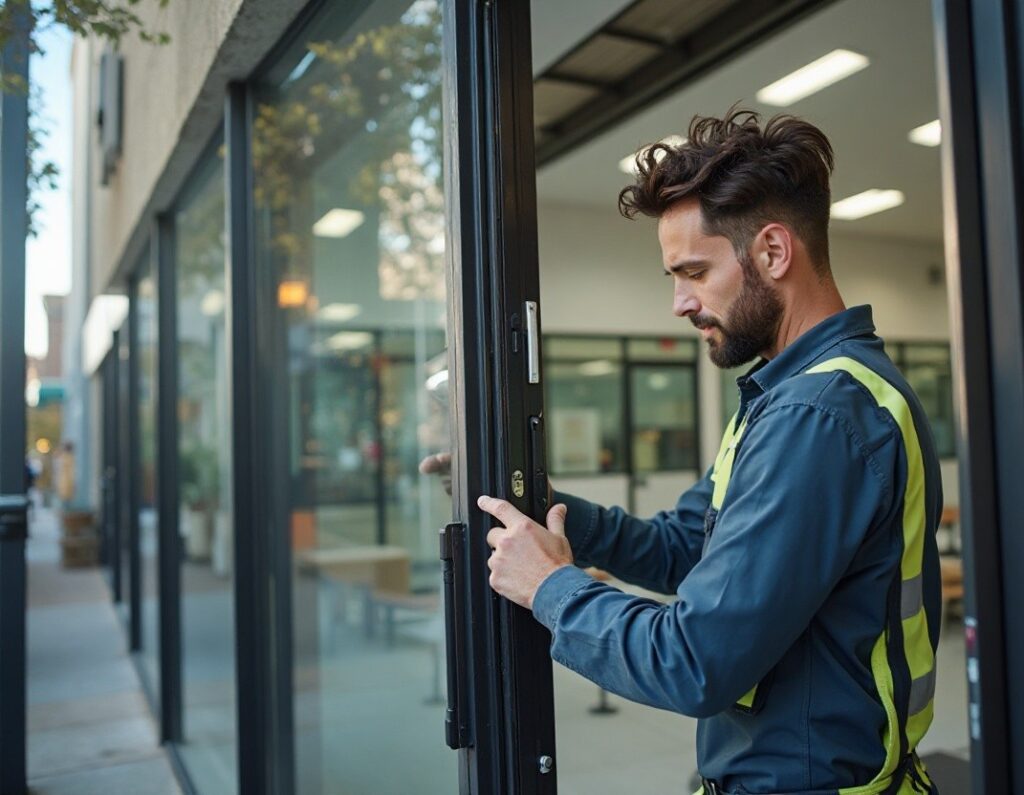
Secure the entrance until help arrives to keep your building safe during the failure. Doors that cannot latch or lock leave your space exposed, especially at night or during busy customer hours. Move valuables away from the opening and keep staff close to the entrance if foot traffic is active.
If the door is stuck open, place a temporary barrier that does not touch the hinges. Avoid pushing or trying to force the latch, because added pressure can tear the metal around the frame or damage the door closer. If the door is stuck shut, keep the area clear so the technician can quickly reach the hinges, the commercial door closer, and the locks. These steps prevent added strain and limit misalignment while you wait for emergency door repair.
3. Document the Door Malfunction for Faster Diagnosis
Document the malfunction for faster diagnosis. Door failures often involve small details that show the exact issue. Take clear photos of the hinges, the gap between the door and the frame, and any visible tear or deformation. Note any sounds during opening, such as scraping or clicking, as these indicate misalignment or worn door hardware.
If the automatic door stopped working, record whether it slowed down, hesitated, or stopped without warning. Write down how long the difficulty lasted and whether the issue affected the door closers or the spring. This information lets the technician match the symptoms to the correct solution before arriving. A clean set of photos and notes shortens diagnostic time, avoids repeated visits, and raises the chance of restoring the unit in a single service call.
4. Stop Using the Door Immediately to Prevent More Damage
Stop using the door immediately to prevent more damage. Continued pressure on failing hinges, springs, or latch parts can turn a simple issue into a larger problem. A door that sags, sticks, or shows gaps often suffers from misalignment or internal hardware wear. Forcing it to open or trying to slam the door shut can bend hinges or damage the closer. These parts support the full weight of the door, and added stress leads to metal tear, broken locks, and further malfunctions.
Ask staff and customers to switch to another entrance until our team arrives. If the building has automatic door functions, switch the unit to manual mode to prevent the motor from straining. Limiting all movement protects the frame, keeps your entrance safe, and lowers total fixing cost by preventing secondary damage.
5. Check for Safety Risks Around the Failed Commercial Door
Check for safety risks to prevent injuries while waiting. When a door stops moving or jams, it often puts pressure on the hinges, the latch, or the spring system. These parts may shift, drop, or snap without warning if the issue worsens. Look for loose screws, metal pieces on the floor, or visible gaps that show misalignment in the frame.
If the door closer leaks oil, block the area so staff and customers do not slip. Keep everyone away from the path of the door because a sudden shift can cause damage in a busy space. If the door is glass, check for hairline cracks that may tear across the surface. These steps help you control the environment and reduce risk until our team arrives.
6. Check if the Issue Involves Hinges, Springs, or Door Hardware
Check whether the problem involves hinges, springs, or door hardware to help you describe it clearly when you call. You do not need technical knowledge; simple observations help the technician understand the issue before they reach your site.
Look at the commercial door hinges to see if they lean, sit unevenly, or pull away from the frame. These signs often show alignment problems or metal fatigue. Check the latch area to see whether it sits too high or too low, which usually indicates a frame shift or door closer problem. If the door feels heavy, the spring may be failing or losing tension. If the opening feels slow or stops midway, the commercial door closer could be the cause. If the locks jam, mention whether the key sticks or the cylinder turns without catching. Each detail helps our team plan the correct fix.
7. Prepare the Area for the Technician to Speed Up the Repair
Prepare the area for the technician to speed up the process. Clear the space around. A failed door often needs full access to the hinges, the latch, the spring unit, and the door closers. Move furniture, bins, or displays so the team can work quickly without interruption. If the opening sits near a customer walkway, place a visual marker so people don’t cross into the work area.
If your building has security controls or automatic door settings, have someone available to unlock panels or provide access to the mechanical room. Keep the photos and notes you gathered ready so the technician can confirm the symptoms and understand the failure pattern. These steps reduce time spent navigating the area and help the technician reach the damaged parts right away, leading to a smoother process.
8. Schedule Preventive Maintenance to Reduce Future Door Malfunctions
Schedule preventive maintenance to reduce future malfunctions. Commercial doors experience constant wear across hinges, latch points, locks, springs, and all connected door hardware. A technician can inspect alignment, measure gaps, adjust the commercial door closer, and clean internal parts that support each opening cycle. These checks catch small signs of difficulty before they turn into a complete failure.
Maintenance also helps identify early wear in metal surfaces, loose screws, and weakening springs that affect the balance. If your building uses an automatic door, regular service keeps sensors and motors functioning safely. Many commercial properties benefit from quarterly maintenance because foot traffic, temperature changes, and daily use create stress on the frame. Routine care keeps the door stable, reduces downtime, protects your customer entrances, and lowers long-term repair costs.
FAQs
Why do door closers stop working on a commercial entrance?
Door closers stop working when internal seals wear out, when the arm loosens, or when the unit loses fluid from long use. A technician can reset tension, replace worn parts, or install a new closer if the damage is advanced.
What causes doors to jam or stay stuck during the day?
Doors jam when alignment shifts, when hardware loosens, or when the frame expands from temperature changes. Heavy foot traffic also strains the hinges until the door stops moving smoothly.
Why would an automatic door stop opening or slow down suddenly?
Automatic doors stop opening when sensors lose power, when debris blocks the track, or when the motor wears down. Quick inspection and cleaning help, but most cases need a service technician.
Why does a door closer create loud noises when the door moves?
A closer becomes loud when the arm loosens, when internal parts wear out, or when the unit loses balance. Most issues can be corrected through adjustment or part replacement.
What should I do after a sudden door failure at my business?
After a door malfunction, stop using the entrance, check for safety risks, and call us to fix the problem. Quick response helps protect the building and reduces damage to the hinges and frame.
How do locks fail on commercial doors?
Locks fail when cylinders wear out or when keys bend the pins. Calling a technician helps prevent damage to the frame or hardware.
What causes gaps to appear around doors?
Gaps appear when the frame shifts, when hinges loosen, or when heavy use pulls doors out of alignment. Ignoring the gap leads to drafts, sticking, or full hardware failure.